I didn’t grow up knowing tree names. I couldn’t tell a jarrah from a karri and I definitely couldn’t tell you whether a forest had been standing for centuries or was planted a generation ago. Somewhere along the line, after enough slow walks through the bush, I made up my mind to pay more attention.
I started asking simple questions, like is this native, was this planted, has this tree always been here or is it new to the party?
Once you start noticing the differences it becomes obvious, almost embarrassingly so.
Old growth forests carry themselves differently. Planted forests do too. Once you learn what to look for it’s a piece of cake to tell which trees have stood the test of time and which are still finding their feet.
This post is for anyone who’s felt that same curiosity, not as a botanist or forester, but as someone who loves walking under trees and wants to understand the landscape a little better. Trust me, it’ll enrich your long walks in the bush that much more.
What Do We Actually Mean by Old Growth?
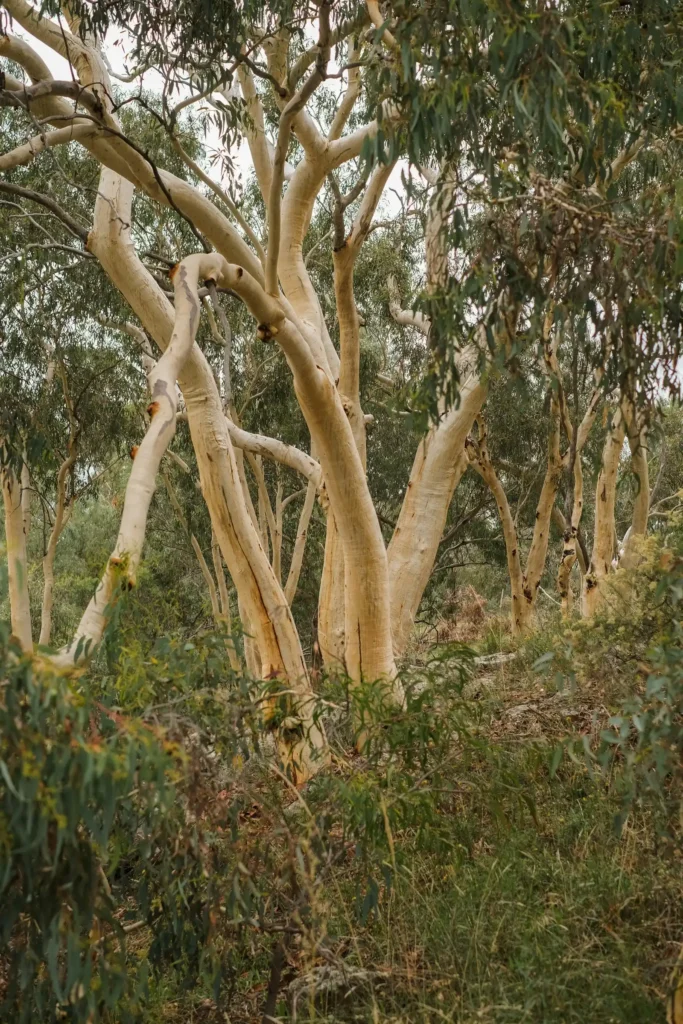
Old growth forests are ecosystems that have developed over a very long time with minimal disturbance. They’re defined by structure, diversity and ecological complexity rather than just age.
In Western Australia, the official definition of old growth is extremely restrictive and controversial. Under current classifications, if a single old growth karri or jarrah tree has been logged within a defined area, often around two hectares, that entire patch can lose its old growth status, even if every surrounding tree is ancient and the forest still functions as old growth.
From an ecological point of view, that definition feels disconnected from reality. Forests don’t reset because one tree was removed decades ago. They retain memory, structure and function, and those qualities are visible if you know where to look.
The Big Difference
The easiest way to tell old growth from planted or second growth forest isn’t by zooming in, it’s by zooming out.
Old growth forests feel uneven, layered and irregular. Nothing lines up, and no two sections look the same. It’s one of those reminders that uniformity doesn’t always mean perfection.
Planted forests feel organised and consistent. Spacing, height and species are often uniform, especially when viewed from a distance.
Key Signs You’re Walking Through Old Growth
A Mix of Ages and Sizes
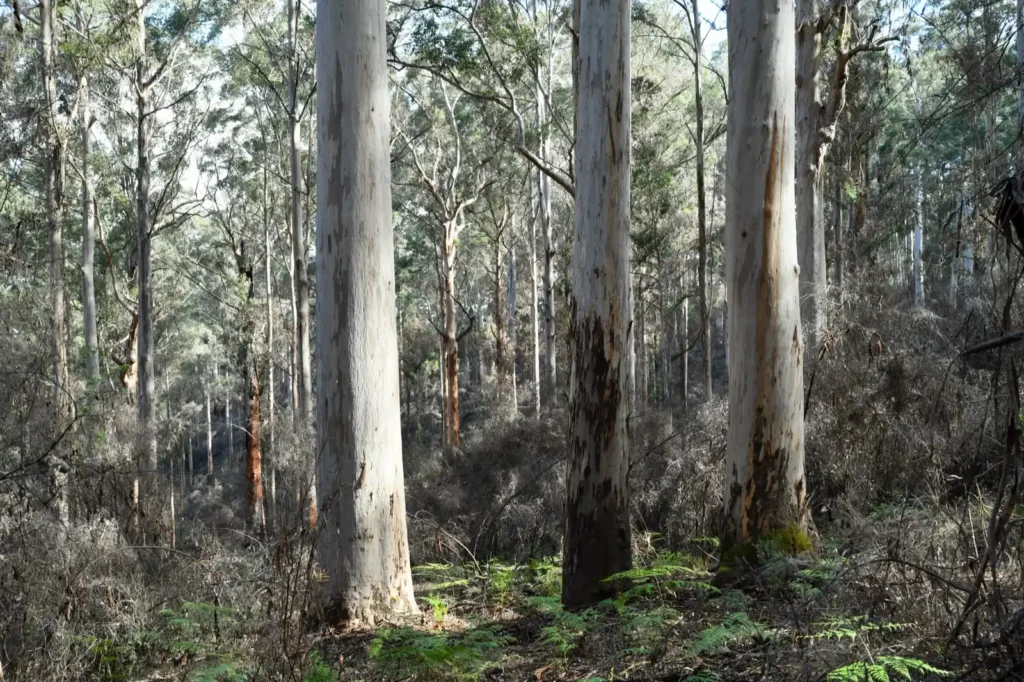
Old growth forests are a mix of tall giants, mid sized trees and younger ones pushing through gaps in the canopy. Heights vary, trunks differ in diameter and the canopy looks broken rather than flat.
That uneven age structure is one of the clearest signs that a forest has been regenerating naturally for a very long time.
Dead Wood Is Everywhere
Old growth forests contain standing dead trees, fallen logs and decaying timber in all stages of breakdown. This dead wood is essential habitat, especially in WA jarrah and karri forests, supporting birds, mammals, insects and fungi.
The forest floor often feels cluttered and textured rather than tidy.
Subtle Tree Shape
Older trees often hold their diameter far higher than you’d expect, showing minimal taper from base to crown. Lower branches are usually long gone, shed decades earlier, while upper branches are thick, irregular and sometimes twisted.
These trees grew slowly, responding to competition, fire and climate over long timeframes.
Bark With History
Old bark looks complex and layered. Thick plates, deep fissures, fire scars and hollows are common. Texture varies along the trunk and between individual trees.
This kind of bark develops over time, not planting cycles.
In WA, some of these old growth trees have some major changes to the very environment they inhabit. If you’re like me and love to imagine what the WA environment was like long before Europeans arrived, check out our post on how the Perth Hills were formed.
Uneven Ground Underfoot
Old forests are rarely flat. You’ll notice pits and mounds created by trees that fell generations ago, lifted root plates, half buried logs and subtle rises and dips across the forest floor.
This microtopography only forms through long, uninterrupted ecological processes.
A Diverse, Living Understory
Look down and you’ll often see mosses, lichens, fungi and shade tolerant plants thriving beneath the canopy. In the southwest this can mean orchids, fungi after rain and deep leaf litter that smells alive.
The understory reflects a system that has had time to settle into balance.
Signs You’re in a Planted (Managed) Forest
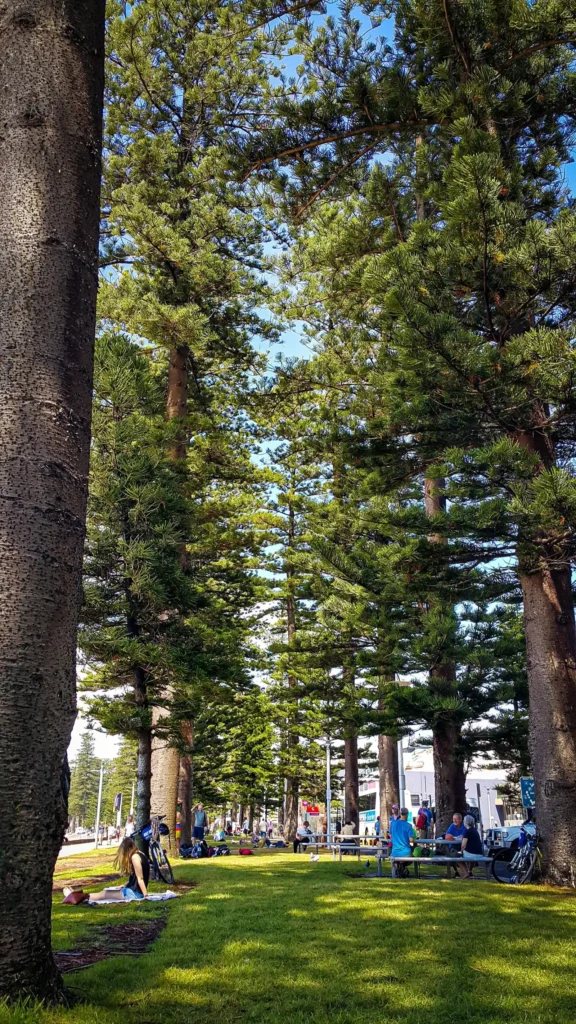
Uniform Structure
Trees are often similar in height, diameter and species. The canopy tends to sit at one level rather than forming layers.
Even Spacing
Spacing often feels deliberate, with trees positioned at consistent distances from one another. As plantations age this can soften, but the pattern usually remains readable.
Quiet Forest Floor
Dense canopies limit light reaching the ground. Understories are often sparse, dry or simple, with fewer species present.
Rapid Growth Traits
Trees often grow quickly, producing straighter trunks and fewer large branches. Growth rings, when visible, are wider and more consistent.
Limited Habitat Features
There is usually less fallen timber, fewer hollows and fewer decay stages present across the site.
Can You Tell a Tree’s Age?
Yep, but with huge caveats.
Exact age requires tools. Increment borers allow ring counts without killing the tree. Diameter measurements combined with species growth factors give rough estimates. Then, just some common sense is key, using historical aerial photos to see when a forest might’ve been planted.
Why This Matters in WA
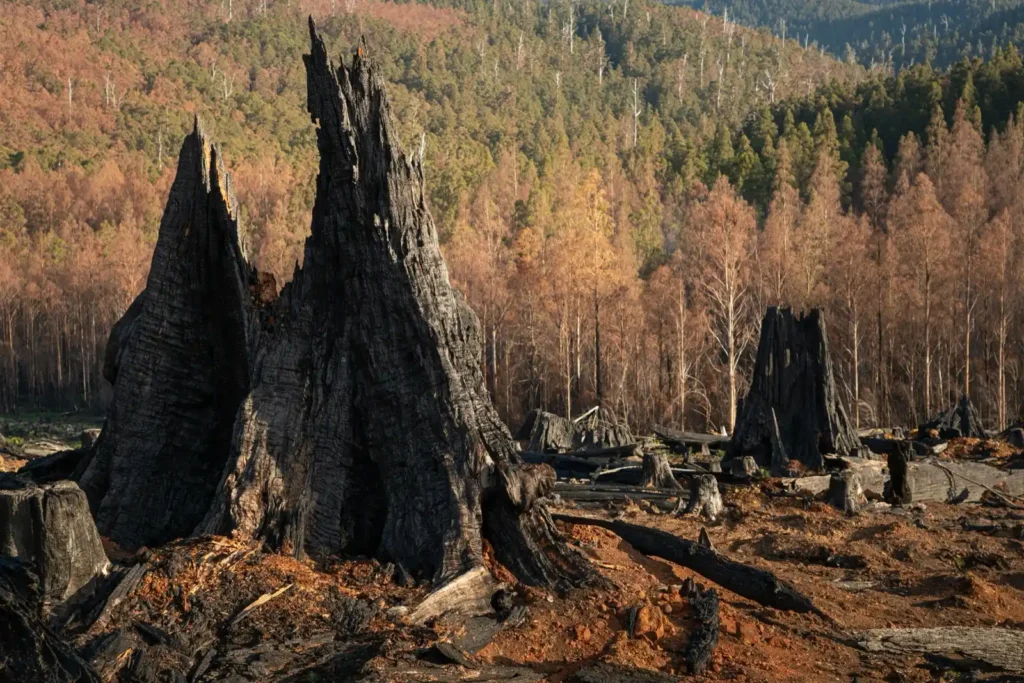
Western Australia holds some of the oldest forest ecosystems on Earth (many of which are continuously threatened by mining and government intervention). Jarrah, karri and marri forests evolved with fire, drought and time measured in centuries.
Understanding the difference between old growth and planted forests isn’t about drawing lines between old and new. But in WA and indeed across the nation, it seems governments prefer to restrict the classification of old growth forests. This, you’d guess, is to ensure the exceptionally profitable mining and forestry industries are able to keep their bellies full, gaining access to hundreds of year old forests, thanks to exceptionally vague and contradicting classifications.
But ecosystems are complex. Simply planting a forest doesn’t replace the hundreds of years of growth nor the biodiversity that uninterrupted time produces. So, when you come across old growth, take the time to acknowledge the ecosystem that time has built. And remember, you can plant trees, but you can’t plant time.
Learning to identify old growth vs planted trees was an exciting step for me. It’s enriched the hiking experience, giving me pause to reflect on the time capsule I’m often standing in. Because once you learn to see the patterns, every walk through the bush becomes richer. You’re no longer just moving through trees, you’re reading a landscape that has been writing itself for a very long time.
And once you see it, you really can’t unsee it.